
Warhol Foundation v. Goldsmith: The Prince Series and the Redefinition of Fair Use
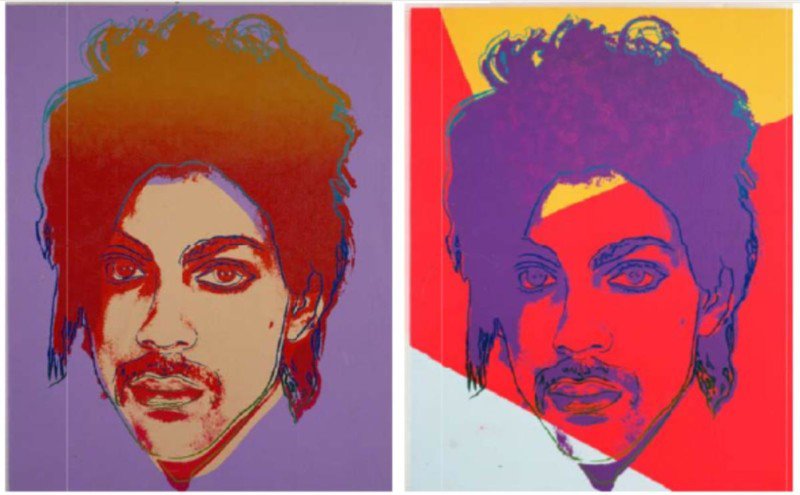
On 18 May 2023, the United States Supreme Court delivered its decision in Andy Warhol Foundation for the Visual Arts v. Goldsmith (598 U.S. 508) — one of the most consequential fair use decisions of the past two decades. The case concerned Andy Warhol’s “Prince Series”, fourteen silkscreen works and two drawings created in 1984 based on photographer Lynn Goldsmith’s 1981 portrait of the musician Prince. The Supreme Court held, 7-2, that the Warhol Foundation’s commercial licensing of one of the works (Orange Prince) to Condé Nast in 2016 was not protected by fair use.
The decision narrowed the scope of “transformative use” — a doctrine that had expanded significantly since the Court’s 1994 decision in Campbell v. Acuff-Rose Music — and has substantial implications for visual art, photography, and emerging AI-generated content. For the broader copyright framework, see our master pillar guide to copyright law in Italy and Europe. For the related Italian/EU originality framework, see our idea/expression dichotomy guide.
The facts
In 1981, Lynn Goldsmith photographed the then-rising musician Prince for Newsweek. The portrait depicted Prince in a vulnerable, intimate pose — Goldsmith’s distinctive style aimed to capture the artist’s inner emotional state.
In 1984, Vanity Fair licensed one of Goldsmith’s photographs as an “artist reference” for Andy Warhol, paying her $400 with the condition that the resulting work appear only once in the magazine. Warhol used the photograph as the basis for sixteen silkscreen works and drawings — the Prince Series. Vanity Fair published one of them (“Purple Prince”) in 1984.
Goldsmith was unaware Warhol had created sixteen works rather than one. After Prince’s death in 2016, Condé Nast licensed Orange Prince from the Warhol Foundation for a commemorative magazine cover, paying $10,000. Goldsmith received nothing. When she contacted the Foundation about this and the broader Prince Series, the Foundation pre-emptively sued seeking a declaratory judgment of non-infringement, asserting fair use.
The procedural path
The Southern District of New York initially ruled for the Warhol Foundation, finding the Prince Series transformative. The Second Circuit reversed in 2021, holding the works substantially similar to Goldsmith’s photograph. The Supreme Court granted certiorari on the limited question of whether Orange Prince‘s commercial licensing to Condé Nast was a fair use under factor 1 (purpose and character of the use).
The SCOTUS decision
Justice Sonia Sotomayor’s majority opinion held that the Warhol Foundation’s commercial licensing of Orange Prince was not fair use under factor 1. The key reasoning:
- “Transformative” requires more than aesthetic transformation: the question is not simply whether the new work “transforms” the original visually, but whether the purpose of the specific use differs meaningfully from the original. Goldsmith’s photograph and the Warhol licensing both served substantially the same purpose: illustrating magazine articles about Prince;
- Commercial purpose matters: where the secondary use is commercial and serves a similar function to the original, fair use requires a stronger justification for transformation;
- Each specific use is evaluated separately: the Court did not rule that the Prince Series as creative works are infringing — only that the specific commercial licensing of Orange Prince to Condé Nast for editorial illustration is not fair use;
- Distinguishing Campbell v. Acuff-Rose: parody (the 2 Live Crew “Pretty Woman” case) involves direct commentary on the original, which justifies transformative status; mere visual modification does not.
Justice Elena Kagan’s dissent (joined by Chief Justice Roberts) argued that the majority unduly narrowed transformative use and would chill artistic appropriation that has been fundamental to modern and contemporary art.
Implications
The Warhol decision has reshaped fair use analysis with consequences extending beyond US borders:
- Appropriation art: artists building on existing copyrighted works face higher uncertainty, particularly for commercial uses;
- Photography licensing: photographers like Goldsmith gained stronger ground for licensing claims against artistic uses with similar commercial purpose;
- AI-generated content: the decision is heavily cited in current AI copyright litigation (Getty Images v. Stability AI, the NY Times v. OpenAI, music industry cases). The “similar purpose” analysis is being applied to ask whether AI outputs trained on copyrighted works serve substantially the same purpose as the originals;
- European parallels: while the EU does not have a US-style fair use doctrine, the Italian framework on originality (CJEU Painer) and parody exception (Deckmyn C-201/13) operates differently but the underlying tension — when does modification create a genuinely new work? — is similar.
For Italian artists and producers
The Warhol decision has limited direct application in Italian law (no US-style fair use). However, for productions distributing in the US, the decision affects:
- Use of pre-existing photographs as basis for derivative art or design;
- Licensing strategies for works incorporating copyrighted source material;
- AI training and output licensing for commercial AI products distributed in US markets.
For Italian copyright analysis of similar appropriation art questions, the framework is different: Italian law requires authorisation for derivative works under Articles 4 and 18 LDA, with parody exception under Italian implementation of Deckmyn. Italian moral rights (Articles 20-24 LDA) add further protection against modifications affecting honour or reputation — see our moral rights guide.
How DANDI supports clients
DANDI.media supports artists, photographers, producers, and AI companies on appropriation art, fair use analysis (for US-distributed works), derivative works clearance, and the increasingly complex AI-generated content questions where Warhol-style reasoning applies. For consultation, book directly with Avv. Claudia Roggero or Avv. Donato Di Pelino.
Related guides
| Topic | Resource |
|---|---|
| Copyright Law in Italy and Europe (master pillar) | /en/copyright-law-italy-europe/ |
| Idea/Expression Dichotomy | /en/idea-expression-dichotomy/ |
| What is Not Protected by Copyright | /en/protecting-ideas/ |
| Copyright Infringement (Mankowitz/Hendrix) | /en/copyright-infringement/ |
| AI Photography (Eldagsen) | /en/ai-artificial-intelligence-photography/ |
| Moral Rights in Italy | /en/moral-right/ |
Dandi Law Firm provides legal assistance in several Practice Areas. Check out our Services or contact Us!