
AI and Photography: The Eldagsen Case and the Legal Framework for AI-Generated Images
In April 2023, German artist Boris Eldagsen rejected the prize at the Sony World Photography Awards after winning the Creative Open category — because his prize-winning image was not a photograph but an AI-generated synthetic image. Eldagsen’s gesture, deliberately staged to provoke debate, crystallised one of the foundational questions of the AI era: is AI-generated imagery photography? Should it be eligible for photography competitions? Does it qualify for copyright protection? Who is the “author”?
The Eldagsen case unfolded just as the legal framework around AI was being built. The EU AI Act (Regulation 2024/1689), the Italian Law 132/2025 on artificial intelligence, and emerging CJEU and national jurisprudence have since established a structured framework that did not exist when Eldagsen submitted his image. This guide analyses the case, the current legal framework for AI-generated photography in Italy and Europe, and the practical implications for photographers, competition organisers, and image users.
For the broader copyright framework, see our master pillar guide to copyright law in Italy and Europe. For the originality threshold that determines AI authorship questions, see our idea/expression dichotomy guide.
In this guide
- The Eldagsen case: Sony World Photography Awards 2023
- What is photography, legally?
- The Italian photography framework
- AI authorship: human creative input required
- EU AI Act: transparency obligations
- Italian Law 132/2025 on AI
- AI training on copyrighted photographs
- Practical implications
- Frequently asked questions
- How DANDI supports photography and AI clients
The Eldagsen case: Sony World Photography Awards 2023
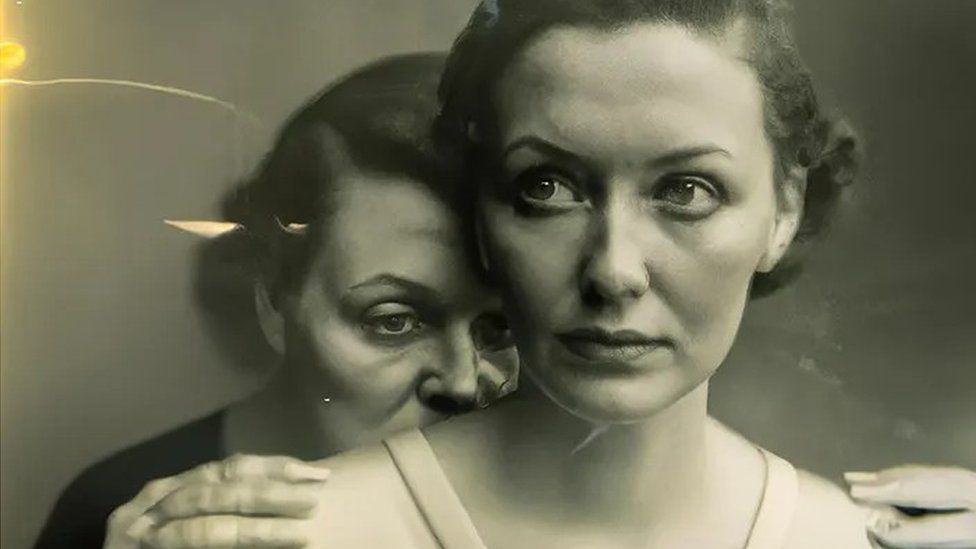
Boris Eldagsen, a German artist with a background in photography and visual arts, submitted an AI-generated black-and-white image titled “The Electrician” to the Creative Open category of the 2023 Sony World Photography Awards. The image depicted two women in a 1940s-style portrait, evoking the visual aesthetic of mid-twentieth-century black-and-white photography.
In April 2023, Eldagsen was announced as the category winner. At the awards ceremony, he refused the prize and revealed that the image had been generated using AI tools, not photographed in the traditional sense. His stated motivation: to provoke a public conversation about whether AI-generated content should compete with human-authored photography, and whether photography competitions had adequate frameworks to distinguish between the two.
The case highlighted multiple legal and practical questions:
- Is AI-generated imagery photography? A “photograph” traditionally refers to an image captured by a camera or photographic process. AI-generated imagery — produced by neural networks trained on millions of existing photographs — does not involve photographic capture in the traditional sense;
- Should AI imagery compete with photography? Competition organisers, art institutions, and stock agencies have had to develop policies on AI content;
- Who is the “author” of AI imagery? The prompt writer? The AI developer? The training data contributors? Or no human author at all?
- Does AI imagery qualify for copyright? Italian and EU copyright requires human authorship — purely AI-generated content typically falls outside protection.
What is photography, legally?
Italian copyright law distinguishes between two categories of photographs:
- Photographic works (opere fotografiche), under Article 2(7) of the Italian Copyright Act: photographs that constitute “intellectual creations of the author through expressing personal touches” — reflecting the photographer’s creative choices in framing, lighting, posing, timing, and aesthetic decision-making. These are protected for life of the author plus 70 years;
- Simple photographs (fotografie semplici), under Articles 87-92 LDA: photographs that document persons, objects, or aspects of nature without rising to the level of intellectual creation. These are protected for 70 years from creation (under the 2025 reform of Law 182/2025 amending Article 92 LDA — previously 20 years).
Both categories require some form of photographic capture — the operation of a camera or photographic apparatus producing an image from real-world light through a lens. AI-generated imagery does not involve this physical capture process. It is, technically, not photography at all.
The Italian photography framework
Whether AI-generated imagery falls within either Italian photography category requires careful analysis:
- Not a photographic work: AI-generated imagery is not produced through photographic capture and does not reflect the creative choices of a photographer operating a camera;
- Not a simple photograph: even the simple-photograph category requires capture of “persons, objects, or aspects of nature” through photographic process;
- Potentially a graphic or pictorial work: AI-generated imagery may be classified as a different category of visual work, but only if it meets the originality threshold and only if a human author with substantial creative input can be identified.
This classification matters: AI-generated imagery presented as “photography” — for example, in stock photography libraries, photo journalism, or competition entries — raises potential issues of misrepresentation, regardless of copyright status.
AI authorship: human creative input required
Italian and EU copyright requires human authorship. The CJEU has consistently held that copyright applies to works that are “the author’s own intellectual creation” — meaning the human author’s intellectual creation expressed through personal touches (see CJEU Infopaq C-5/08 and Painer C-145/10).
This generates clear categories for AI-related content:
- Purely AI-generated content (limited human input — typically a brief prompt): does NOT qualify for copyright protection in Italy and the EU. No author can be identified; the AI itself cannot be an author under Italian law;
- AI-assisted content with substantial human creative input: CAN qualify for copyright protection. Where a human artist exercises substantial creative control — iterative refinement, curation from many outputs, modification and integration into a broader human-shaped work — the resulting work can be protected on its human-authored elements;
- Hybrid traditional + AI workflows: increasingly common. A photographer takes a base photograph, then uses AI tools for editing, restoration, or enhancement. The photographic capture is human; the AI processing is a tool. The resulting work is typically a photographic work with the human photographer as author.
The threshold of “substantial human creative input” is not yet definitively established by case law. Italian and CJEU jurisprudence on this question is evolving rapidly. The conservative position: where AI plays a dominant role in the creative output, copyright protection becomes uncertain.
EU AI Act: transparency obligations
The EU AI Act (Regulation 2024/1689) introduced transparency obligations relevant to AI-generated photography:
- Disclosure of synthetic content: AI-generated images deployed in commercial contexts typically require labelling and disclosure that they are AI-generated;
- Deepfakes: AI-generated content that imitates identifiable persons faces specific transparency obligations, particularly where deceptive presentation is involved;
- High-risk AI uses: AI systems used in specific high-risk contexts (biometric identification, certain news contexts) face additional regulatory requirements;
- Foundation models: providers of large AI foundation models face specific obligations regarding training data transparency and copyright compliance.
These obligations apply alongside (not in place of) the underlying copyright framework. An AI-generated image may simultaneously face:
- copyright analysis (typically: no protection due to lack of human authorship);
- transparency obligations (must be labelled);
- personality rights analysis (if it depicts identifiable persons);
- misrepresentation analysis (if presented as photography in a context that implies photographic capture).
Italian Law 132/2025 on AI
Italian Law no. 132 of 22 September 2025 supplements the EU AI Act with national provisions. Relevant for photography:
- Identification of synthetic content: Italian-specific requirements on labelling AI-generated content distributed in Italy;
- Authorship attribution: provisions on how AI-assisted works are attributed for copyright and moral rights purposes;
- Liability framework: provisions on liability for AI-generated content that infringes copyright, personality rights, or other protected interests;
- Sector-specific applications: provisions on AI use in specific sectors including media and journalism.
The Italian framework operates as a national supplement to the EU AI Act, with specific provisions reflecting Italian regulatory priorities including cultural heritage and personality rights protection.
AI training on copyrighted photographs
A separate but related question: can AI models be lawfully trained on copyrighted photographs?
The EU framework is governed by DSM Directive Articles 3 and 4 on text and data mining (TDM):
- Article 3: TDM permitted for scientific research by research organisations and cultural heritage institutions, with rights holders unable to opt out;
- Article 4: TDM permitted for any purpose, including commercial AI training, unless rights holders have expressly opted out in a machine-readable manner.
For photographers and image rights holders, this generates a practical action:
- To prevent commercial AI training on your photographs, you must opt out in a machine-readable manner — typically through robots.txt directives, metadata in the image files, or platform-specific opt-out mechanisms;
- Without opt-out, commercial AI providers can lawfully train on publicly accessible photographs under Article 4 framework;
- Specific Italian implementation has been transposed in Articles 70-ter and 70-quater LDA.
Italian stock photography agencies and major image rights holders have increasingly implemented opt-out mechanisms. Individual photographers should consider their own opt-out strategy for online portfolios.
Practical implications
For photographers
- Document creative choices: maintain records that demonstrate human creative input for photographs that incorporate AI processing;
- Disclose AI use: when submitting to competitions, stock libraries, or commercial clients, transparency about AI tools used is increasingly expected and may be legally required;
- Implement AI training opt-out: through robots.txt, metadata, and platform settings to prevent unauthorised use of your work in AI training;
- Consider watermarking and authenticity verification: emerging standards (C2PA, content provenance) help distinguish human-authored from AI-generated content.
For competition organisers and stock libraries
- Clear policies on AI content: explicit rules on whether AI-generated content is accepted, how it must be disclosed, and how it is categorised;
- Verification mechanisms: tools to detect AI-generated content (though imperfect, increasingly sophisticated);
- Retroactive review: the Eldagsen case demonstrated that AI content can pass undetected; competition organisers may need retroactive review procedures.
For image users (publishers, agencies, advertisers)
- Verify content origin: distinguish AI-generated from human-authored content, particularly for editorial and journalistic uses;
- Comply with transparency obligations: under EU AI Act, commercial AI-generated content typically requires labelling;
- Assess copyright status: AI-generated content may not be protected, allowing wider use but also exposing to lack of exclusivity;
- Personality rights compliance: AI imagery depicting identifiable persons (deepfakes) requires consent under Article 10 Italian Civil Code.
Frequently asked questions
Is AI-generated imagery considered photography?
Legally, generally no. Italian and EU copyright definitions of photography require a photographic capture process. AI-generated imagery, produced by neural networks without camera capture, falls outside the traditional photographic categories — though it may qualify as a different category of visual work if substantial human creative input is present.
Can I copyright an AI-generated image?
Purely AI-generated images (limited human input) generally do NOT qualify for copyright protection in Italy and the EU, which require human authorship. AI-assisted works with substantial human creative input (curation, modification, integration) can qualify for copyright on the human-authored elements.
What did Boris Eldagsen do?
In April 2023, German artist Boris Eldagsen submitted an AI-generated image to the Sony World Photography Awards Creative Open category and won. He then refused the prize, revealing the image was AI-generated, to provoke debate about AI in photography competitions. The case became a foundational reference point in the AI photography debate.
Do I have to disclose AI use in my photography?
Under the EU AI Act (Regulation 2024/1689), commercial AI-generated content typically requires labelling and disclosure. In competition and editorial contexts, disclosure is increasingly expected. The Italian Law 132/2025 supplements with national-specific requirements.
Can AI companies train models on my photographs?
Under DSM Directive Article 4 (transposed in Italy as Articles 70-ter and 70-quater LDA), commercial AI training is permitted unless the rights holder has opted out in a machine-readable manner. Photographers should implement opt-out through robots.txt, metadata, or platform settings to prevent unauthorised training use.
What about AI deepfakes depicting real people?
AI-generated imagery depicting identifiable persons engages personality rights under Article 10 Italian Civil Code, independent of copyright. Unauthorised commercial use requires consent. The EU AI Act adds transparency obligations on deepfakes. Italian Law 132/2025 adds further national-specific provisions.
Can stock photography agencies host AI-generated content?
Yes, with appropriate disclosure. Major stock agencies (Getty, Adobe Stock, Shutterstock) have developed policies on AI content — some accept it with labelling, others restrict it. Italian stock agencies have similar policies. Buyers should verify content origin and licensing terms.
What if I use AI to edit a photograph I took?
Traditional AI editing tools (background removal, colour correction, restoration) are typically treated as tools used by the human photographer-author. The photographic capture remains human; the AI processing is auxiliary. The resulting work is generally protectable as a photographic work with the human photographer as author. More extensive AI generation (replacing substantial portions, generating entirely new elements) may shift the analysis.
How DANDI supports photography and AI clients
DANDI.media supports photographers, image rights holders, AI developers, and content users on AI photography matters:
- Copyright clearance and authorship analysis: assessment of AI-related works for copyright protection;
- AI training opt-out: implementation of opt-out mechanisms for photography portfolios under DSM Article 4 framework;
- Contracts: AI clauses in photography contracts, stock licensing, commercial use agreements;
- Compliance: integration of EU AI Act and Italian Law 132/2025 transparency obligations into commercial workflows;
- Deepfake and personality rights: defence and enforcement of personality rights against unauthorised AI imagery;
- Tax credit AI clause: for audiovisual productions integrating AI photography under D.I. MiC-MEF 225/2024 and subsequent amendments.
For consultation, book directly with Avv. Claudia Roggero or Avv. Donato Di Pelino.
Related guides
| Topic | Resource |
|---|---|
| Copyright Law in Italy and Europe (master pillar) | /en/copyright-law-italy-europe/ |
| Idea/Expression Dichotomy (CJEU Painer) | /en/idea-expression-dichotomy/ |
| What is Not Protected by Copyright | /en/protecting-ideas/ |
| Preventing Image Theft | /en/preventing-image-theft/ |
| Copyright Infringement (Mankowitz/Hendrix) | /en/copyright-infringement/ |
| Moral Rights in Italy and Europe | /en/moral-right/ |
| Moral Rights in Film (AI deepfake) | /en/moral-rights-film/ |
Dandi Law Firm provides legal assistance in several Practice Areas. Check out our Services or contact Us!