
Parodying Fashion Labels: Trademark Parody Under US, EU, and Italian Law
Fashion parodies — from Vetememes raincoats mocking Vetements, to Brian Lichtenberg’s “Homies” tees riffing on Hermès, to “Ain’t Laurent Without Yves” wares, to House of Holland’s anniversary parody tees — have become a recurring phenomenon in fashion. Whether these parodies are protected speech or trademark infringement is one of the most-litigated questions in modern trademark law. The answer turns on national framework: the United States provides robust parody defences under the Lanham Act and First Amendment; the European Union has a narrower parody framework under CJEU jurisprudence; Italy implements parody as a specific copyright and trademark exception.
This guide explains the framework comparatively, with attention to the recent SCOTUS decision in Jack Daniel’s v. VIP Products (2023) that reshaped US parody analysis. For the broader copyright framework, see our master pillar guide to copyright law in Italy and Europe.
In this guide
Parody as defence to trademark infringement
Trademark law’s underlying purpose is consumer protection: trademarks indicate the source of goods and services, with associated goodwill. Use of another’s mark — or one confusingly similar — risks consumer confusion and damages the trademark owner’s goodwill. Parody complicates this analysis: an effective parody initially brings the original to mind, but is clear enough that it cannot be mistaken for the original itself.
The legal challenge is identifying when a “parody” is genuinely transformative commentary versus when it is simply free-riding on a famous mark while invoking parody as a cover.
US framework: the Lanham Act
The Lanham Act governs US trademark law and establishes the right of trademark owners to federal registration and protection against confusingly similar uses. Trademark infringement under § 32(1) tests whether the secondary mark “is likely to cause confusion, or to cause mistake, or to deceive” consumers.
The Lanham Act contains statutory fair use provisions permitting non-infringing use in specific contexts:
- Nominative fair use: using a trademark to identify the trademark owner’s goods (e.g., “compatible with iPhone”);
- Comparative advertising: using a trademark to identify a competitor’s product;
- Parody: using a trademark in a manner that comments on, criticises, or satirises the original.
An effective parody should eliminate the “likelihood of confusion” by containing sufficient variations from the original to clearly indicate it is not related to the source of the original mark — while still bringing the original to mind for the parody to work.
Three patterns of US court rulings
US courts ruling against attempted trademark parodies have generally taken three approaches:
- “Not actually a parody”: courts have held that simply exploiting the popularity of a trademark to attract customers is not parody. A parody must imitate or mimic the original for comic effect or commentary. Pure commercial appropriation does not qualify;
- “Parody achieved but not strong enough”: even where the work amounts to parody, the parody may not be strong enough to dispel consumer confusion. The classic example: in 1977, the court held that “Gucchi Goo” diaper bags were too similar to Gucci handbags for the parody to be protected;
- “Parody achieved but dilutes the trademark”: under the Trademark Anti-Dilution Act of 1996, even a parody not causing confusion can be enjoined if it dilutes the distinctive character of a famous mark (dilution by blurring) or harms the mark’s reputation (dilution by tarnishment).
Successful parody cases
Where parody defences have succeeded, courts have found the parody sufficiently strong to eliminate consumer confusion and outweigh dilution concerns:
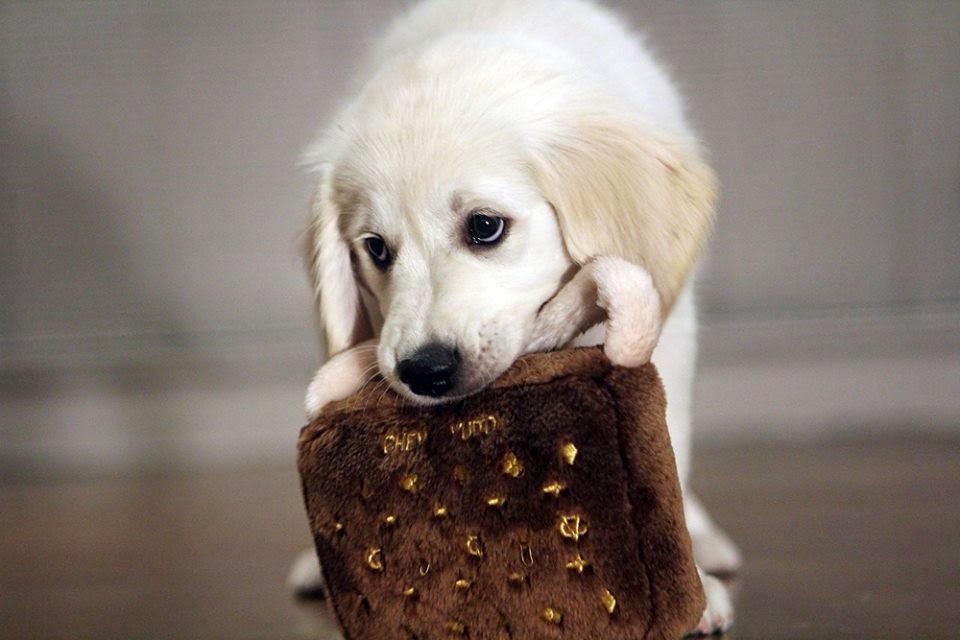
- Louis Vuitton v. Haute Diggity Dog (4th Circuit, 2007): the “Chewy Vuiton” dog toy parodied Louis Vuitton handbags. The court found the toy used similar name, monogram, design, and coloring — clearly identifying it as imitation — while differentiating enough (Chewy/Louis, Vuiton/Vuitton) to constitute parody rather than infringement;
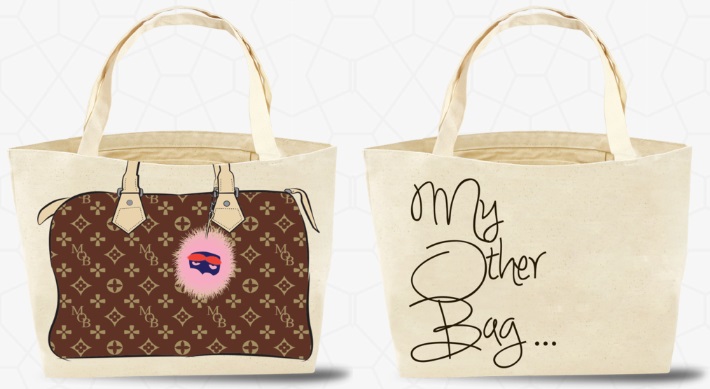
- Louis Vuitton v. My Other Bag (SDNY): canvas bags bearing Louis Vuitton-style marks with the slogan “My Other Bag is a Louis Vuitton” were held to be parody, with the court rejecting Louis Vuitton’s infringement claim;
- First Amendment-based protections: in some cases, US courts have ruled in favour of parodies even where some likelihood of confusion existed, on First Amendment grounds protecting both parody and satire for social commentary and commercial purposes.
Jack Daniel’s v. VIP Products (SCOTUS 2023)
The most consequential recent US trademark parody decision is Jack Daniel’s Properties, Inc. v. VIP Products LLC (599 U.S. ___, 8 June 2023). The case concerned a dog toy called “Bad Spaniels” that mimicked Jack Daniel’s whiskey bottle design with humorous scatological replacements (e.g., “Old No. 2” instead of “Old No. 7”, “43% Poo by Vol.” instead of alcohol percentage).
The Supreme Court held unanimously that:
- When a trademark is used as a source identifier for the defendant’s goods (i.e., to identify and distinguish them in the marketplace), the standard likelihood-of-confusion test applies — even where the use is also expressive or parodic;
- The previous Rogers test — which provided broad First Amendment protection for expressive uses of trademarks — does not apply when the defendant uses the mark as a source identifier;
- Bad Spaniels used “Bad Spaniels” as its source identifier, so the standard infringement test applied and the parody defence required ordinary confusion analysis;
- The Court remanded for application of the standard test, with strong indication that VIP would lose.
The Jack Daniel’s decision narrowed US trademark parody protection significantly. Fashion brands using parody as source identifier (rather than purely commentary) now face standard likelihood-of-confusion analysis rather than broad First Amendment protection.
EU framework: CJEU Deckmyn
The EU framework operates differently. The CJEU in Deckmyn v. Vandersteen (C-201/13, 3 September 2014) established the EU parody framework. Key holdings:
- “Parody” is an autonomous concept of EU law: not subject to national variation;
- A parody must evoke an existing work while being noticeably different from it;
- A parody must constitute an expression of humour or mockery;
- A parody does not need to display original character (departure from older national requirements);
- Member States retain discretion on whether and how to balance parody freedom against the rights and interests of the original work’s authors.
EU trademark law (Regulation 2017/1001) provides separate but related frameworks. Member States transpose the parody framework with national variation — France, Germany, and Italy have meaningfully different specific applications.
Italian framework
Italian law transposes the EU parody framework through:
- Article 71-quinquies LDA: copyright parody, caricature, and pastiche exception, transposing Directive 2019/790 Article 17(7);
- Italian Industrial Property Code (D.Lgs. 30/2005): trademark protections, with limited parody-specific provisions;
- Italian Civil Code unfair competition provisions: parody can engage unfair competition where it parasitically uses brand value.
Italian courts have generally been narrower than US courts on trademark parody — favouring trademark owners more often than not, particularly for famous luxury fashion brands. The Italian framework treats parody as a specific exception to copyright (Article 71-quinquies) rather than a broad fair use defence covering all IP. For trademark parody specifically, the analysis focuses on:
- Whether the parodic intent is clear enough to dispel consumer confusion;
- Whether the use takes “unfair advantage” of the original mark’s reputation;
- Whether the parody causes “detriment” to the mark’s distinctive character or reputation.
For Italian fashion brands considering parody products — or fashion brands considering enforcement against parodists — the Italian framework provides meaningful enforcement against unauthorised parodies that risk consumer confusion or commercial dilution.
How DANDI supports brand creators and parodists
DANDI.media advises fashion brands, parody creators, content companies, and IP rights holders on trademark parody:
- Pre-launch parody assessment for fashion and consumer products;
- Cease-and-desist response for trademark owners objecting to parodies;
- Brand enforcement strategy for trademark owners against unauthorised parodies;
- Cross-border parody risk assessment across US, EU, and Italian frameworks;
- Settlement negotiation for parody disputes;
- AI-generated parody and deepfake fashion compliance.
For consultation, book directly with Avv. Claudia Roggero or Avv. Donato Di Pelino.
Related guides
| Topic | Resource |
|---|---|
| Copyright Law in Italy and Europe (master pillar) | /en/copyright-law-italy-europe/ |
| Yoko Ono v. John Lemon (posthumous trademark) | /en/yoko-ono-sues-john-lemon/ |
| Idea/Expression Dichotomy | /en/idea-expression-dichotomy/ |
| Right to Image: Protect Your Likeness | /en/right-to-image-how-to-protect-your-likeness-online-and-offline/ |
| Trade Secrets in Italy | /en/trade-secrets-in-italy/ |
Dandi Law Firm provides legal assistance in several Practice Areas. Check out our Services or contact Us!