
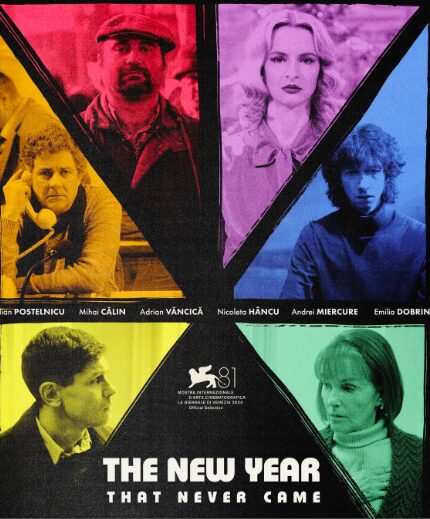
“The New Year That Never Came”: Legal Lessons from a European Co-Production Masterpiece
When a Romanian debut filmmaker wins the Orizzonti Prize at Venice with a film co-produced between Romania, Serbia, and Creative Europe support, behind the artistic success lies a solid legal architecture. “The New Year That Never Came” (Anul Nou care n-a fost) by Bogdan Mureșanu conquered international critics in 2024, winning Best Film in the Orizzonti section of the 81st Venice Film Festival. This guide analyses the film as a case study of excellence in international rights management — and extracts five operational lessons for producers structuring multi-country European co-productions.
For the broader co-production framework, see our Italy-Serbia and Balkans co-productions guide. For the Italian tax credit framework, see our Italian film tax credits guide. For Romanian incentives, see our Romania film production guide.
In this guide
- The film: a revolution in 138 minutes
- Anatomy of a European co-production
- Challenge 1: The Co-Production Agreement
- Challenge 2: Chain of Title across borders
- Challenge 3: Music and clearances
- Challenge 4: Distribution rights and territorial conflicts
- Challenge 5: Tax credit compliance in dual systems
- How DANDI supports cross-border productions
The film: a revolution in 138 minutes
“The New Year That Never Came” tells the final hours before the Romanian revolution of December 1989 through six interconnected stories: an actress forced to perform propaganda, a father terrified by his son’s Christmas letter wishing for Ceaușescu’s death, students attempting to escape across the Danube. A choral tragicomedy that builds tension until the explosive final sequence set to Ravel’s Boléro.
Results:
- 23 international awards;
- European Film Awards nomination (European Discovery 2024 – Prix FIPRESCI);
- 90,000+ cinema admissions in Romania (arthouse record);
- Distribution in 20+ countries;
- Italian release: 4 December 2025 (Trent Film).
Anatomy of a European co-production
Main production: Kinotopia (Romania) — production company founded by Mureșanu himself.
Co-production partners:
- All Inclusive Films (Serbia);
- Chainsaw Europe (Romania);
- Romanian National Television (TVR).
In association with: Nomad Solo, Creative Europe – MEDIA (funding support).
Distribution: Cercamon (international sales), Trent Film (Italy), Memento Distribution (France), other territories.
The choice to structure the project as an international co-production offers concrete advantages: access to multiple funds (Romanian Film Centre CNC, Serbian Film Centre, Creative Europe MEDIA, Romanian Ministry of Culture, tax incentives), tax optimisation across cash rebates and tax shelters, international talent access, and optimised territorial distribution. But each advantage creates a corresponding legal challenge requiring careful drafting.
Challenge 1: The Co-Production Agreement
The co-production agreement is the most important document and must regulate:
- Ownership split: who owns what (Kinotopia majority + creative control, All Inclusive Films minority + Serbia distribution rights, Chainsaw Europe technical services + equity);
- Decision-making: creative decisions to director-producer; financial decisions requiring majority approval; main casting joint; final cut guaranteed to director;
- Distribution rights split: Romania to Kinotopia, Serbia to All Inclusive Films, rest of world joint via sales agent;
- Revenue waterfall: recoupment of production costs pro-rata, sales agent commission, distributor fees per territory, net profits split per ownership percentage;
- Deadlock provisions: what happens if co-producers disagree;
- Leaving rights: can a co-producer exit and under what conditions;
- Derivative works: who has rights to sequels, remakes, adaptations, TV format.
Challenge 2: Chain of Title across borders
A multi-country co-production multiplies the chain of title complexity. Every right contributing to the film must be traced through national legal frameworks that may differ substantially:
- Screenplay rights: writer’s agreement under Romanian copyright law, but Italian distributor will require warranties enforceable in Italian courts;
- Director’s rights: under Italian Article 44 LDA, director is a statutory co-author of audiovisual works — Romanian and Serbian frameworks differ;
- Performer rights: each performer’s contract must address all participating territories;
- Producer assignments: the main producer must hold or be assignee of all rights necessary for worldwide exploitation, with co-producers retaining specified territorial rights;
- Public funding rights: CNC, Serbian Film Centre, Creative Europe each impose specific reporting and credit obligations.
For a complete chain of title checklist, see our chain of title documents guide.
Challenge 3: Music and clearances
Mureșanu’s use of Ravel’s Boléro in the final sequence illustrates a common music clearance trap. Maurice Ravel died in 1937, so the composition entered the public domain in EU jurisdictions in 2007/2008 (70 years post-mortem under Article 25 Italian LDA and parallel EU rules — see our public domain guide).
However: the specific recording used in the film has its own separate copyright (phonogram rights under Articles 75 ff. LDA, 70 years from publication under Directive 2011/77/EU). The production therefore needed:
- No synchronisation licence for the composition (public domain);
- Master use licence for the specific orchestral recording used;
- Performer authorisation through the relevant collecting society or direct licensing.
Other clearances for “The New Year That Never Came” included archive footage of the 1989 Romanian revolution (where some footage may be in public domain or fall under news/historical exceptions), period-accurate property and costume design (typically not requiring clearance), and any third-party content visible in scenes. For full clearance framework, see our clearing copyrighted material guide.
Challenge 4: Distribution rights and territorial conflicts
Multi-territory distribution creates complex coordination requirements:
- Territorial allocation: each co-producer retains rights in its national territory (Romania to Kinotopia, Serbia to All Inclusive Films);
- Sales agent appointment: Cercamon handles international sales — but the appointment must clearly define commission, scope of rights, term, and termination;
- Streaming rights: must be specifically allocated — typically held back for later licensing to platforms (Netflix, Amazon, MUBI, etc.) after theatrical and festival window;
- Hold-back provisions: ensuring that local territorial distributors do not undermine each other through cross-border streaming or import of physical media;
- Festival rights: ensuring that international festival participation is properly coordinated and credited.
For the Italian release through Trent Film on 4 December 2025, the Italian distribution agreement specifically addressed the Italian theatrical window, dubbed/subtitled language versions, ancillary rights, and reporting back to the international co-production structure.
Challenge 5: Tax credit compliance in dual systems
Italy-Romania co-productions (and broader EU multi-country structures) require compliance with multiple incentive frameworks simultaneously:
- Romanian CNC requirements: 45% cash rebate framework, cultural test, qualified expenses;
- Italian D.I. MiC-MEF 225/2024: production tax credit, cultural eligibility, mandatory AI clause under Article 7 paragraph 6 (relevant for any Italian-financed scenes or post-production);
- Serbian incentives: 25-30% cash rebate through Serbia Film Centre, with parallel cultural and procedural requirements;
- Eurimages support: pan-European film fund requiring specific co-production structuring;
- Creative Europe MEDIA: EU-level support with its own requirements;
- Anti-double-funding rules: state aid limits apply across all sources, requiring careful coordination to stay within EU permitted aggregate.
For “The New Year That Never Came”, the Romanian and Serbian sources were combined with Creative Europe MEDIA — coordinating multiple national and EU compliance frameworks throughout production. Each jurisdiction’s audit and certification procedures had to be respected without conflicts.
How DANDI supports cross-border productions
DANDI.media supports Italian producers and international partners on multi-country European co-productions:
- Co-production agreement structuring and drafting;
- Chain of title across multiple jurisdictions;
- Music synchronisation and master use clearance coordination;
- Distribution rights structuring and sales agent agreements;
- Multi-system tax credit compliance (Italian D.I. 225/2024, Romanian CNC, Serbian Film Centre);
- Eurimages and Creative Europe application coordination;
- Festival, distribution, and broadcast clearance review;
- AI clause coordination across jurisdictions.
For consultation, book directly with Avv. Claudia Roggero or Avv. Donato Di Pelino.
Related guides
| Topic | Resource |
|---|---|
| Italy-Serbia and Balkans Film Co-Productions | /en/film-co-productions-italy-serbia-balkans/ |
| Italian Film Tax Credits | /en/italy-film-tax-credits/ |
| Film Production in Romania (45% rebate) | /en/film-production-in-romania/ |
| Clearing Copyrighted Material | /en/clearing-copyrighted-material/ |
| Chain of Title Documents | /en/chain-title-cot-basic-documents/ |
| Public Domain | /en/public-domain/ |
| Moral Rights in Film | /en/moral-rights-film/ |
| Copyright Law in Italy and Europe (master pillar) | /en/copyright-law-italy-europe/ |
Dandi Law Firm provides legal assistance in several Practice Areas. Check out our Services or contact Us!